Drop Dead City: A Commentary
TBD
Drop Dead City, a 2024 documentary directed by Michael Rohatyn and Peter Yost, reconstructs New York City’s near bankruptcy in 1975 as both a technical financial collapse and a deeper urban crisis. It implicitly shows that the fiscal crisis was the breaking point of a particular model of the modern metropolis.
Under Governor Nelson Rockefeller, New York had built a generous urban welfare state even if it couldn’t afford to do so. Projects were continuously funded through Tax Anticipation Notes or Bond Anticipation Notes, which are short-term municipal debt instruments issued to bridge cash flow gaps before tax revenue or a long-term bond is collected. This fiscal system of “just trust me, bro” completely collapsed in 1975 when the banks realized that there was no money backing the notes and stopped lending to the city.
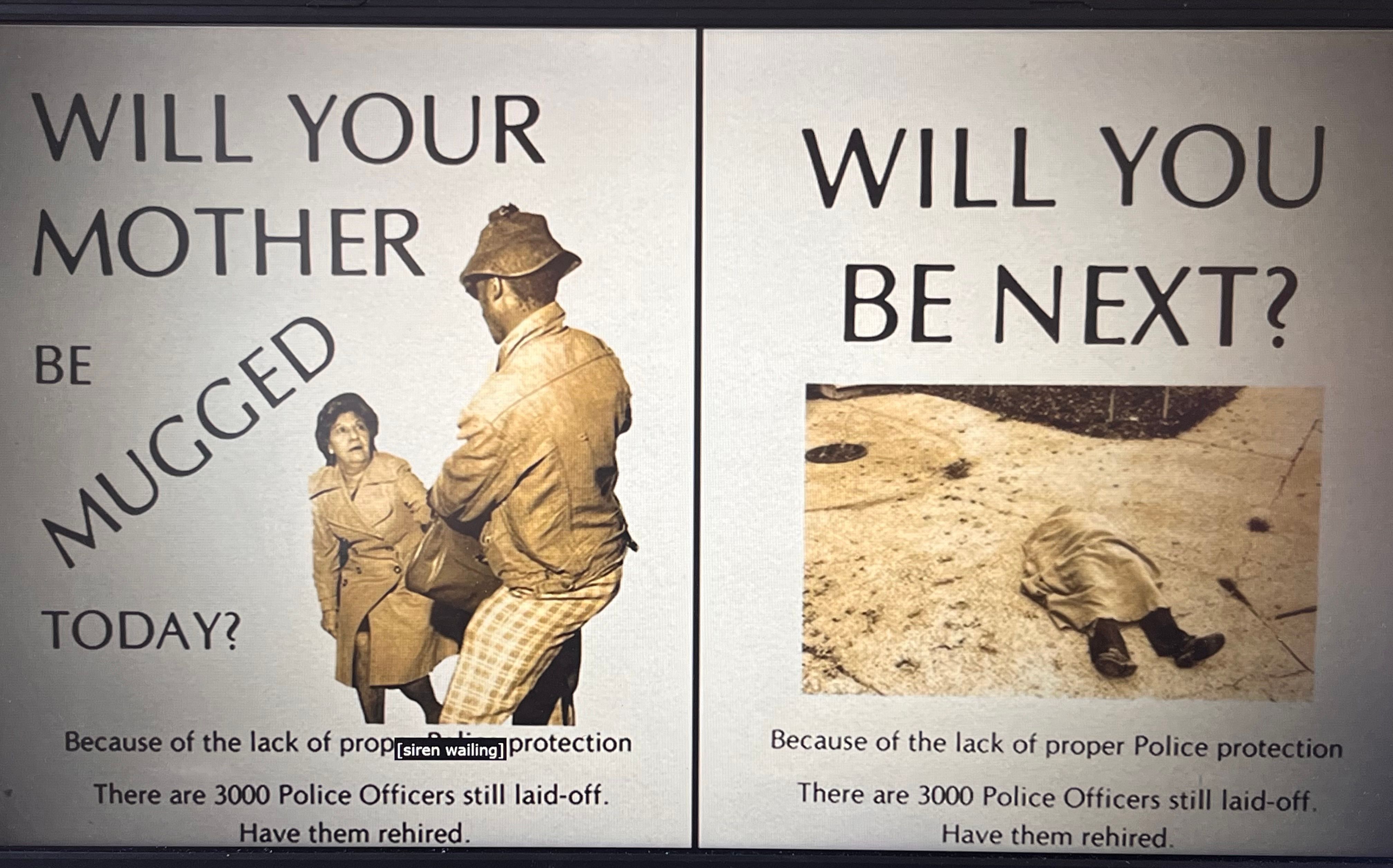
While the money movers and political figures went around blaming each other for the crisis, images showing labor strikes, deindustrialization, dilapidated neighborhoods, and garbage-strewn streets pop up alongside lively music, adding just enough humor to remind us that New York does survive this, in the most New York way it can. After all, the 70s were defined by punk rock, hip hop, and disco—vibrant and gritty and loud.
This juxtaposition between financial breakdown and a creative cultural renaissance is exactly what excited Rem Koolhaas. He saw the metropolis as a world of extremes, and one therefore open to every kind of human experience. Delirious New York, written between 1972 and 1978, challenges the notion of the city as a “hopeless case.” Drop Dead City similarly frames the crisis as a story of urban resilience and invites us to reflect on how that same spirit persists today.
The film’s constant cuts between bureaucracy and street life showcase New York as a city of fragments, a city of organized complexity. Precisely because it is spread across overlapping systems, neighborhoods, and cultures, the city can absorb shocks unevenly, allowing some parts to fail while others adapt, improvise, and keep the whole in motion. As Mayor Abe Beame put it, the city is “too big to fail.”