Antiseptic Shock
TBD
Is the Whitney Biennial still a relevant cultural event? The 2017 and 2019 editions were mired in controversy. Most notably, the inclusion in 2017 of Dana Schutz’s semi-abstract painting of Emmett Till sparked protests against the “Black Death Spectacle,” and two years later, eight artists withdrew their work from the exhibition over a museum board member’s ties to tear gas manufacturing. Now, the Whitney has managed to produce a controversy-free Biennial with an antiseptic show that asks little of its viewers. The didactics explicitly celebrate the “voiding [of] clear ideological declarations,” and that void is deeply felt.
Per the Whitney’s press release, “The works on view explore how intimacy and power are braided together through forms of care, contestation, and improvisation, and through the social, institutional, technological, and ecological infrastructures that shape society.” If this sounds incredibly broad, it’s because it is. Fifty-six artists, duos, and collectives are featured in the show, but the lack of a clear curatorial framework prevents the works themselves from responding to each other. It instead creates a jumble of works that are tenuously connected through wall text and not much else.
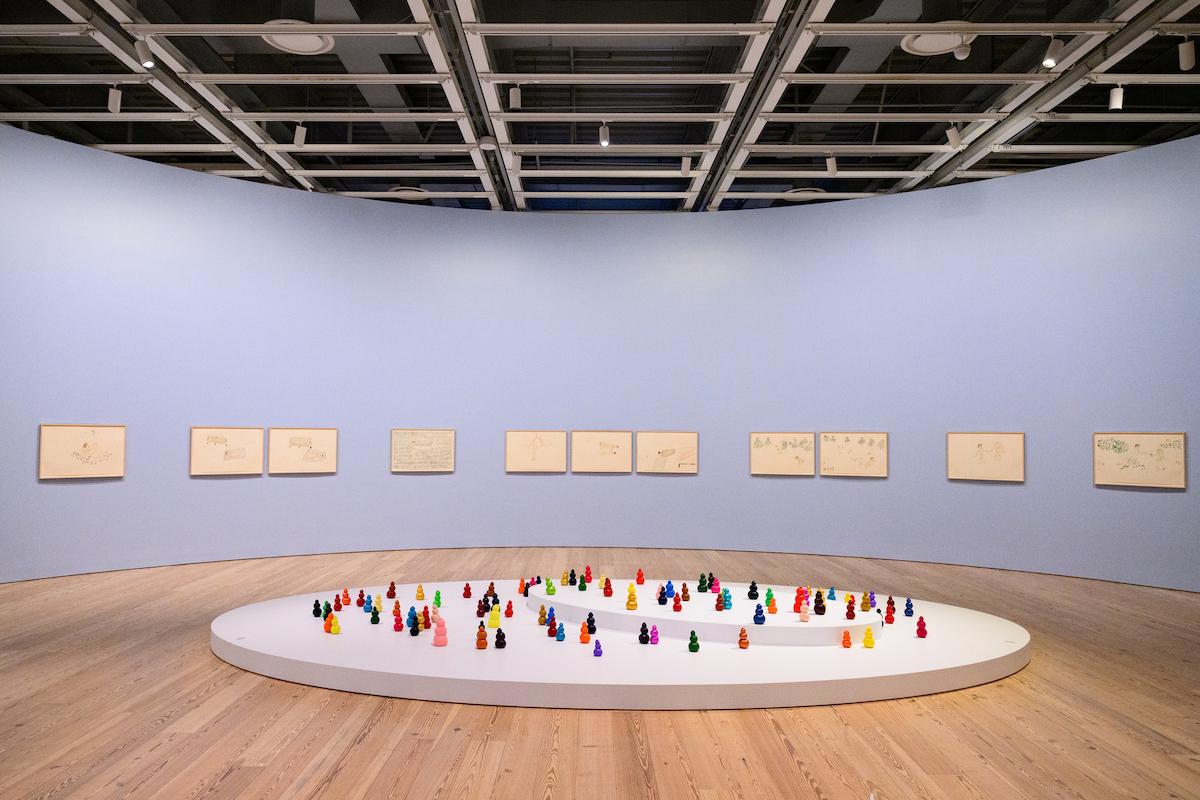
The most affecting work was created by former Cooper Union alumna Emilie Louise Gossiaux, who was blinded after being struck by a car outside Cooper. Her work centers around the deeply intimate relationship she had with her guide dog, London, who passed away in September 2025. Gossiaux honors her in the Biennial with dozens of hand-sculpted recreations of the dog’s favorite chew toy, as well as pencil drawings of the two merging bodies. Its tenderness manages to stir some genuine emotion, despite the sterility of context it is presented in.
The Whitney Biennial is open through August 23, 2026.